
Launching ASHERAH: Innovations in Jewish Ritual and Prayer
A student publication of Harvard Divinity School

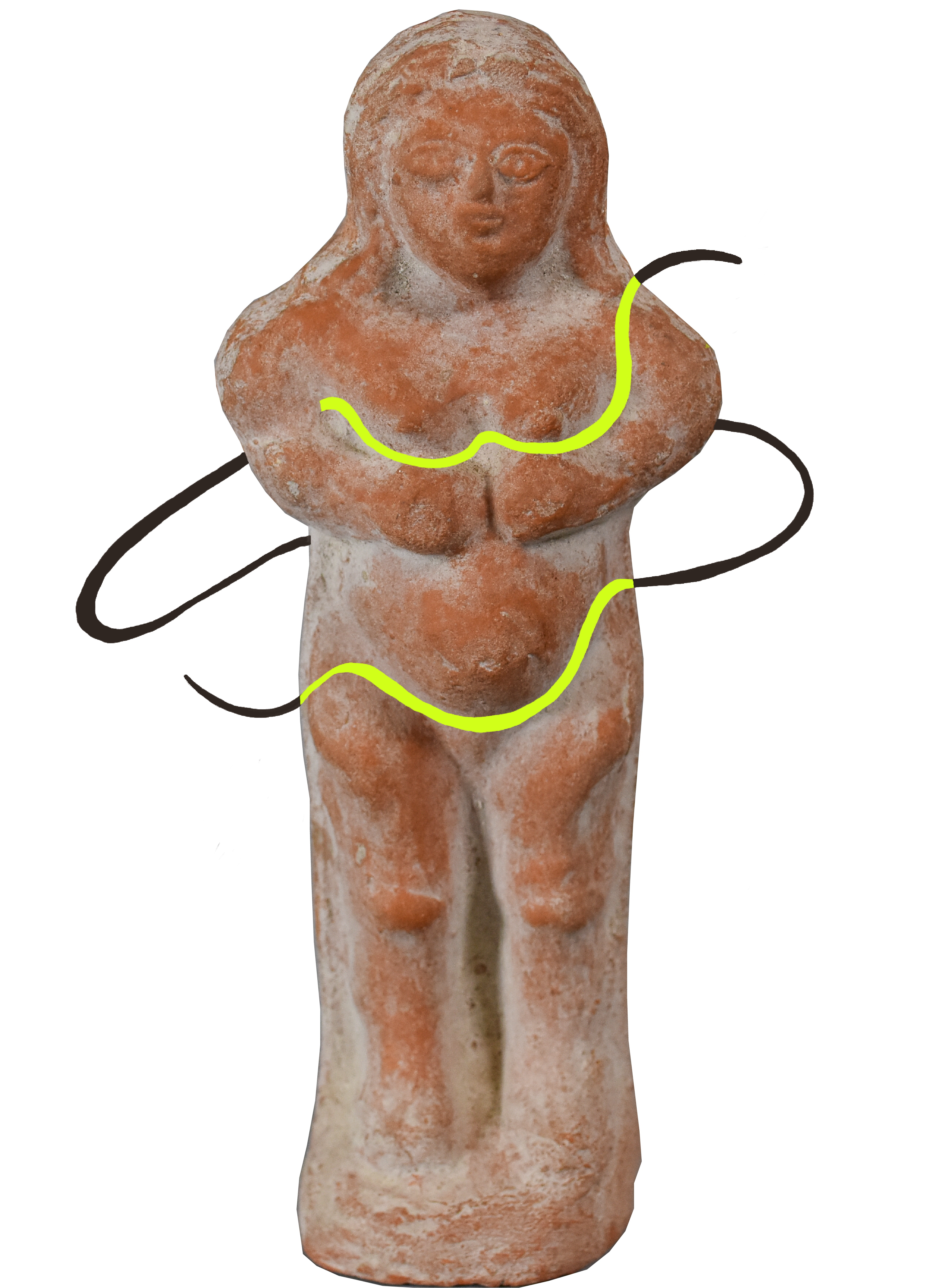
We are thrilled to invite you into the first volume of ASHERAH: Innovations in Jewish Ritual and Prayer, a student publication of Harvard Divinity School. This post, and the subsequent articles on this Substack, will feature excerpts from the complete volume. The complete volume can be found at asherah-journal.com.
Please read on to find the following introductory pieces in Volume I of ASHERAH:
Preface by Shaul Magid
Artist Statement by Miriam Pellegrino
Introduction by Daisy Jacobs and Lila Rimalovski
Preface: Why ASHERAH?
Shaul Magid
When we first announced our new Harvard Divinity School Jewish liturgy journal, ASHERAH, we received many responses stretching from congratulations to curiosity to disturbance and even anger.
Why ASHERAH? Asherah was an ancient goddess, related to a tree of the same name, that ancient Israelites recognized and worshiped, as discussed at length by Saul Olyan in his 1988 book Asherah and the Cult of Yahweh. Some claim she was originally a Canaanite deity, but that remains a matter of scholarly debate. She was certainly adopted and used by Israelites in their places of worship and homes in both the kingdoms of Judah and the more unruly northern kingdom of Israel.1
What purveyors and some practitioners of modern Judaism might not know is that ancient Israelites were not anicongraphic, certainly not before the Deuteronomist reforms during the reign of Josiah in the Kingdom of Judah in the eighth century BCE, and likely not even afterward.2 In his 2000 book The Artless Jew, Kalman Bland argues that aniconism in Judaism is really a modern phenomenon, and even after the medieval transition to a purer monotheism (what we might call the “Maimonidean turn”) visual images in the form of mosaics and paintings were not prohibited and regularly appear in Jewish ritual spaces, as archeology in the region of Palestine and Assyria has shown. Saul Olyan notes that “the biblical evidence from both the north and south suggests that the Asherah was a standard and legitimate part of the cult of YAHWEH in non-Deuteronomistic circles, probably even among conservative groups…”3
In her 1992 book, In The Wake of the Goddesses, Tikva Frymer-Kensky explores the existence and use of ancient Israelite “Goddesses” in ritual practices and aesthetic decor. In her chapter on Asherah, she discusses the most well-known appearance of Asherah in scripture, in the story of Elijah’s battle against the Tyrian cult of Ba’al. She notes that Asherah is not mentioned as Ba’al’s companion. Asherah is not mentioned in the literature of the region more generally and, in fact, she writes, “Asherah was not YHWH’s rival…The early struggle of Israel was against the gods of Canaan — Baal and El, who controlled the pantheon and the universe in Canaanite thought.” Asherah, she argues, “was kind of irrelevant.” Asherah is only overtly mentioned four times in prophetic literature; Jeremiah 17:2; Isaiah 17:8, 27:9; and Michah 5:13. In many cases, it is the Deuteronomist polemic against iconography – including Asherah. For example, there is no mention of Asherah in the Elijah-Elisha school, suggesting they did not oppose it.4 In summation, the status of Asherah in ancient Israel remains contentious.
The connection between Asherah figurines and trees, fertility, and nature in the world of the ancient Israelites is well-known. Initially, these objects seemed to function as an iconic part of God’s divine system. The Deuteronomists and their aniconic inclinations sought to destroy all physical representations in Jewish worship and thus Asherah figurines no longer fit into this new Israelite paradigm. Nevertheless, Frymer-Kensky argues, “The people persisted in worshiping in this old style, drawing assurance of the divine input in nature even as they were being told to be mindful of the human.”
In short, the Asherah figurines may have disappeared from Jewish life but what she represented was certainly not forgotten. Discussing the role of Asherah in ancient Israelite society, Frymer-Kensky notes, “The people were able to add a reminder of divinity to their homes, and a visualization of abundance (the lactating trees) while they continued to maintain devotion to the one invisible transcendent God.”
While the Asherah figurine became prohibited in ritual practice, its spirit seems to live on in Kabbalistic notions of the Shekhina (divine presence in the world), in elaborate and quite graphic “Kabbalistic trees” (examined by Yossi Chajes in his book The Kabbalistic Tree), in the Hasidic teaching of praying in the forest, in Nahman of Bratslav’s notion that nature itself is engaged in prayer, and in Rav Kook’s romantic vision of the land of Israel as pulsating with divinity.
More recently the Jewish environmental movement, spearheaded by leaders like Jill Hammer, Lynn Gottlieb, Everett Gendler, and Arthur Waskow, and even more recently explored in Hava Tirosh-Samuelson’s 2002 edited volume Judaism and Ecology and David Seidenberg’s 2015 Kabbalah and Ecology, has highlighted how the relationship between Jewish worship and the natural world was not erased with the prohibitions of the Asherah. Jews merely substituted new ways of absorbing the natural world into their devotional practices.
We chose to name our liturgy journal ASHERAH because we wanted to retrieve a spiritual moment in the ancient Israelite tradition, not to subvert the norms that constitute Judaism today as much as to enhance them by reviving the idea of devotional practices that are not severed from the beauty of the natural world all of us inhabit. Our intention is to recognize those ancient Israelite traditions that are part of our inheritance, celebrate our environment and recognize its inherent sanctity, and draw attention to the responsibility we have as Jews and human beings to protect the natural world.
I have heard (I have no scholarly verification of this) it suggested that there is an etymological, perhaps midrashic, connection between Asherah (AshR) and the Hebrew word Osher or Ashrei (AshR), meaning both abundance and joy. May this small offering of Jewish liturgical creations, interventions, and explanations bring you a taste of AshR. May you find in it inspiration for your own ritual practice, exploration, and creative life.
Artist Statement
Miriam Pellegrino
I had never heard of Asherah before being introduced to the fledgling premise of this publication. However, as soon as she was named for me, and I saw her fecund form, I felt a sense of homecoming. In the curvature of surviving Asherah statues, I saw an undulating thread and felt it tugging me back across the span of millennia to the hearths of ancient Israelites — some of whom may have been my (extremely distant) ancestors. These were Jews who lived within a cosmology that was still overtly connected to the divine feminine, the birthing Earth, the sacred trees; people who felt the numinosity of these things so acutely that they desired to be reminded of them each day by keeping a likeness of the Goddess in their homes.
Now in 2026, as a Jew living in a time of climate crisis (not to mention crises of many other kinds), I feel the tug of Asherah’s thread calling us to remember her and a different way of being – a different way of being Jews, of being humans, of being small nodes in a larger system. For me, this journal is one offering to this collective act of remembering.
We have centered the Asherah image in the design of this journal — namely, through the illustration on the cover and the inclusion of photos of Asherah-related fragments throughout the volume — because we hope these pages can, in some small way, place Asherah back on the collective hearth, figuratively, and perhaps on your particular hearth too, literally.
In this spirit, all of the design decisions in ASHERAH were carefully considered by our team to pay homage to the bits of her original form that have survived the centuries, while also adding a contemporary flair to this incarnation of the Goddess. For instance, the color palette has patinated browns and terracotta tones alongside pops of lively chartreuse. As far as font, certain titles are in a hand-drafted serif that feels earthy and old, while the body copy is in a sleek, modern serif.
Throughout the journal, we aimed to let the pieces — both the ancient fragments and the works of our contributors — largely speak for themselves. I had the privilege of photographing the archaeological fragments seen in the following pages from the collection of the Harvard Museum of the Ancient Near East. These fragments, most of which were excavated by a British expedition in 1935 from the region of Samaria, Palestine (now the northern part of the West Bank), are largely over 2,000 years old. Some are pieces from human bodies (possibly Asherah), and some are pieces of animal bodies (all ungulates) from the same site. By placing the images of human and non-human animal shards in conversation, we hope to trouble the anthropocentrism that Asherah herself calls into question. Once I had the photos, I then added digital threads to the images to create composite graphics that honor Asherah’s pull in the present. My goal was for the fragments, in all their crumbling glory, to be the focal points of the graphics with my additions serving as accents.
I took a similar approach when editing and laying out others’ contributions. Edits to written pieces were minimal and focused on essential grammar, leaving each author to write in the way that was most true to their word (for example, we didn’t impose standards around the capitalization of religiously-related words or the spelling of G-d).
I hope that the design of this journal allows you to feel the tug of Asherah’s thread, too. May this small devotion to her, the Jewish tradition, and our Earth bring joy to the act of remembering our collective past and looking to our collective future.
Introduction
Daisy Jacobs & Lila Rimalovski
Greetings, dear reader. We meet you here, in the space between the words on this page, with questions, prayers, and longings. Please bring yours, too.
We are Daisy and Lila, Sephardi and Ashkenazi Jews from the UK and the US, who find ourselves in friendship and collaboration in the creation of this journal. We bring you the following pages as an offering — a gesture of love and vision incubated by a small number of people who are looking toward our tradition to realize a future that is more free because it is made sacred.
Please know we are not scholars of the ancient texts, we did not go to yeshiva, nor are we Rabbis. We grew up Reform and have turned towards our Jewish practice with reverence as adults. We are embodied ritualists, learning through our own lives, bodies, and our diasporic communities. We are coming from minyanim and farms and Shabbat tables that sit on the sidelines of mainstream Jewish life, largely because of our queerness, our anti-racism, our support for Palestinian liberation, and our yearning for a Judaism that speaks in new ways to our present realities.
What you will find within these pages is a snapshot of what is alive in the hearts, bodies, minds, and souls of a handful of Jews at Harvard Divinity School (and some collaborators) who are wrestling with questions of Jewish prayer and ritual at this exact moment in time. This is our attempt at something like the Yizkor books from the shtetls of Eastern Europe: What are the ongoings of the Jews in this place? What are we thinking about? What are we fretting about? What are we praying about, and to whom, and when? This journal is incomplete. We think there is something very Jewish about that.
We must also note that this publication finds itself in a moment encumbered by war, by fascism and genocide, by religious- and ethno-nationalism, by a reckoning with the rapid development of AI and its impact on planet and people, by climate collapse, by pandemics, and by the pervasive presence of disconnection and loneliness. It is in the precise context of such crises that spiritual innovation often arises. Our prayers emerge from broken hearts and protest chants, from mutual aid group chats and interfaith fast days, and from whispers of ancestors who sacrificed their lives in pursuit of another way.
At a time when mass media and public narratives want us to believe that religion is declining as fascism takes hold, we are observing the opposite. We are part of a generation turning toward the technology of ritual with full might, perhaps in the hope that lineage and prayer can hold us alone and together when seemingly nothing else can. But we are not making this turn to tradition with tired eyes. We find ourselves reaching for the old and looking for the new. As the Kabbalists teach us, we look for what is said in the space between letters. We look toward the liturgy and ritual of holy days, toward music and melody, toward familiar prayers, toward forgotten teachers, and ask: What might we not have seen yet?
This evolution of Jewish practice is occurring across the denominational spectrum. There is value in the entirety of Jewish infrastructure that colors our spiritual landscape; what some want to keep and some want to release should be determined, we believe, by the needs of communities. From our corner of a largely anti-establishment Jewish world, we hear echoes of desire for what some might call a post-rabbinic, post-Temple, post-Zionist, post-denominational, post-gender, post-liturgy kind of Judaism. Though we are not so interested in labels, we do acknowledge that some of what our peers call to move past are the bones that have kept the tradition alive. We feel, though, that the bones have been reduced to only that – brittle labels – and we are now trying to bring back the flesh.
As Jews across the diaspora and denominations turn towards ancient wisdom with eager hearts, we might find ourselves rediscovering practices that are more earth-based, songful, magical, mystical, and gender expansive. We might also find answers around us, as Jews in diaspora have always done. To be a Jew in diaspora is a porous act, allowing oneself to be shaped by context — by different lands, languages, practices, religions, and peoples. We are interested in the ways in which this porousness, this intentional approach to living beyond the promised land, can continue to enable a new kind of Judaism to emerge. What was suppressed by the Holocaust, by the whitening hand of Zionism, or by the global project of Christian conversion, might be able to come up to breathe.
With the emergence of a new-old kind of Judaism (we don’t want to pretend that Judaism hasn’t reinvented itself thousands of times), we find ourselves facing the question of religious authority: Who has it? To whom should we be looking for wisdom and guidance? As our practices shift in response to time and place, so too do the people leading these practices. Increasingly, we find ourselves reaching beyond the traditional religious figures that have defined Judaism for generations, and instead looking for leadership from those who share our experiences and identities: queer and trans Jews are looking for queer and trans Jewish leaders; Jews of color are looking for leadership from Jews of color; people who have converted or come to Judaism in non-traditional ways are praying and practicing with others who have non-linear paths. In these margins, we found Asherah.
Asherah (when written in this journal with just the “A” capitalized) refers to the ancient Canaanite Goddess who is, somehow, entirely present and invisiblized in most expressions of modern Judaism. As Shaul describes in his preface, Asherah is widely considered to be the birther and nurturer – of newness, of the fecundity of land, and of life itself. It is suspected that she was once revered as the embodiment of the Tree of Life, a familiar Jewish symbol that reminds us of an era of Jewish connection to the land that looks very different than it does today. Yet this Goddess has been abandoned and buried by time. We call on her now to nurture the seeds enclosed in these pages — stories of seeking and grappling; stories of grief and of joy, of despair and hope, of turning away and turning toward; stories of our past and for our future — in hopes that a liberatory, Earth-revering Judaism can outshine the Jewish story that has dominated the headlines in recent years.
In these pages you will find people reaching for what their tradition can offer them, asking what can be found in that which currently exists, and how they can make it their own. You will encounter voices from across the spectrum of Jewish practice and tradition, each approaching the question of what it means to do Judaism or to be Jewish in different ways. And, brucha Asherah, this is just the first volume of a multi-year project. We hope you will find perspectives that you align with, as well as those that you don’t, and some that require you to wrestle with what lives within you.
The journal is divided into three parts: an exploration of theory and history; a collection of personal reflections; and, finally, a section that we are calling ‘practice and creation,’ featuring poems, prayers, art, and more. Each written piece is accompanied by a fragment on its title page — an actual piece of a multi-thousand-year-old figurine loosely attributed to Asherah, from the archives of the Harvard Museum of the Ancient Near East down the street from Divinity Hall. Our brilliant designer, Miriam Pellegrino, hand-picked each item to weave Asherah’s presence throughout the enclosed words.
We invite you to take a risk here, to open yourself to the possibility that Asherah too has a piece of the story for you to tell. Read, listen, pause, and breathe. The project of making sacred requires all of us.
See 2 Kings 21:7 and 1 Kings 15:12,13.
See 2 Kings 17:16,17 and Saul Olyan, Asherah and the Cult of Yahweh (Atlanta: Society of Biblical Literature, 1988), p. 4.
Olyan, p. 9.
Olyan, p. 17.
Blessings on the launch. I am all in favor of innovative, embodied, and creative forms of worship and spiritual expression That engage more than just our eyes and ears with words and melodies. It’s not clear to me from Your introduction if the publication is ideologically antizionist or that’s just part of your respective personal ideological identity. And is this going to be a place for all forms of creative liturgical expression - including new /old expressions of the jewish love for and sense of belonging to eretz yisrael (as opposed to the land belonging the Zionist Jews.)? Or not? Promoting all Jews in their relationships with the holy one another, humankind, and all life on earth that shares the same Life Force - yay! Promoting antizionism, which I personally think is the wrong way to support Palestinian peoples and peoplehood — boo.
If a free copy is still available I'd gladly receive it. Thanks.